The whole feature list.
Including the parts we don't have.
Every line on this page was checked against the app that ships. Nothing here is planned, in beta, or true on one platform and quietly missing on another. Where something is missing, it says so, on this page, in the same size type.
- Tunnel
- WireGuard
- Countries
- 15+
- Languages
- 10
One protocol, with no legacy fallback
Nodes run by independent operators
Every screen and error, not just buttons
Decentralized underneath. Ordinary in your hand.
The architecture is unusual. Using it should not be. Here is what is actually in the app.
WireGuard, and only WireGuard
One protocol, chosen because it is small enough to read and fast enough to forget about. There is no protocol picker to get wrong, and no legacy fallback quietly waiting behind it.
A new key for every connection
Your device generates a fresh Curve25519 keypair each time you connect. The private half goes into the keychain and never leaves the device. Only the public key is sent to the node.
Nodes we do not own
Phantom VPN has no server fleet. Nodes are run by independent operators and found by querying the sentinelhub-2 chain directly from your device. The list is public, so you can check it yourself.
The tunnel skips us entirely
Once the session opens, encrypted traffic runs device to node. Our orchestrator sets the session up and then steps out. It is not in the data path, so your browsing is not ours to hold.
Failover that does the work
Nodes are ranked by measured latency before you connect. If a handshake fails, Phantom tries the next healthy node, up to three attempts, and sidelines the bad one for two minutes so you do not land on it again.
Full-tunnel routing
AllowedIPs is 0.0.0.0/0 and ::/0. Every app on the device goes through the tunnel, not just your browser. There is no partial mode and nothing opted out by default.
Auto-reconnect on network change
On iPhone and iPad, an on-demand rule brings the tunnel back when you move from Wi-Fi to cellular. It ships off by default, so turn it on in Settings if you want it. Android does not have this yet.
Switching, grouped by country
Nodes are listed by country so you pick a place, not a hostname. More than 15 countries usually have a node online. Coverage moves because Sentinel is permissionless, so the app shows the live list.
Ten languages, all the way down
English, German, Spanish, French, Italian, Japanese, Korean, Portuguese, Russian and Swedish. Every screen and every error, not just the buttons. Switch language without restarting.
Built for each platform
Swift on Apple, Kotlin on Android. Menu-bar mode and launch at login on Mac, a two-pane layout on iPad, and a 12.7MB installer that puts the Mac app in /Applications.
No ad or tracking SDKs on iOS
The iOS app carries no third-party ad or tracking SDKs. There is nothing embedded in it that reports your behaviour to someone else.
Premium follows the account
Not a seat, not a device slot. Sign in on anything you own and Premium is already there. Use it on all your devices.
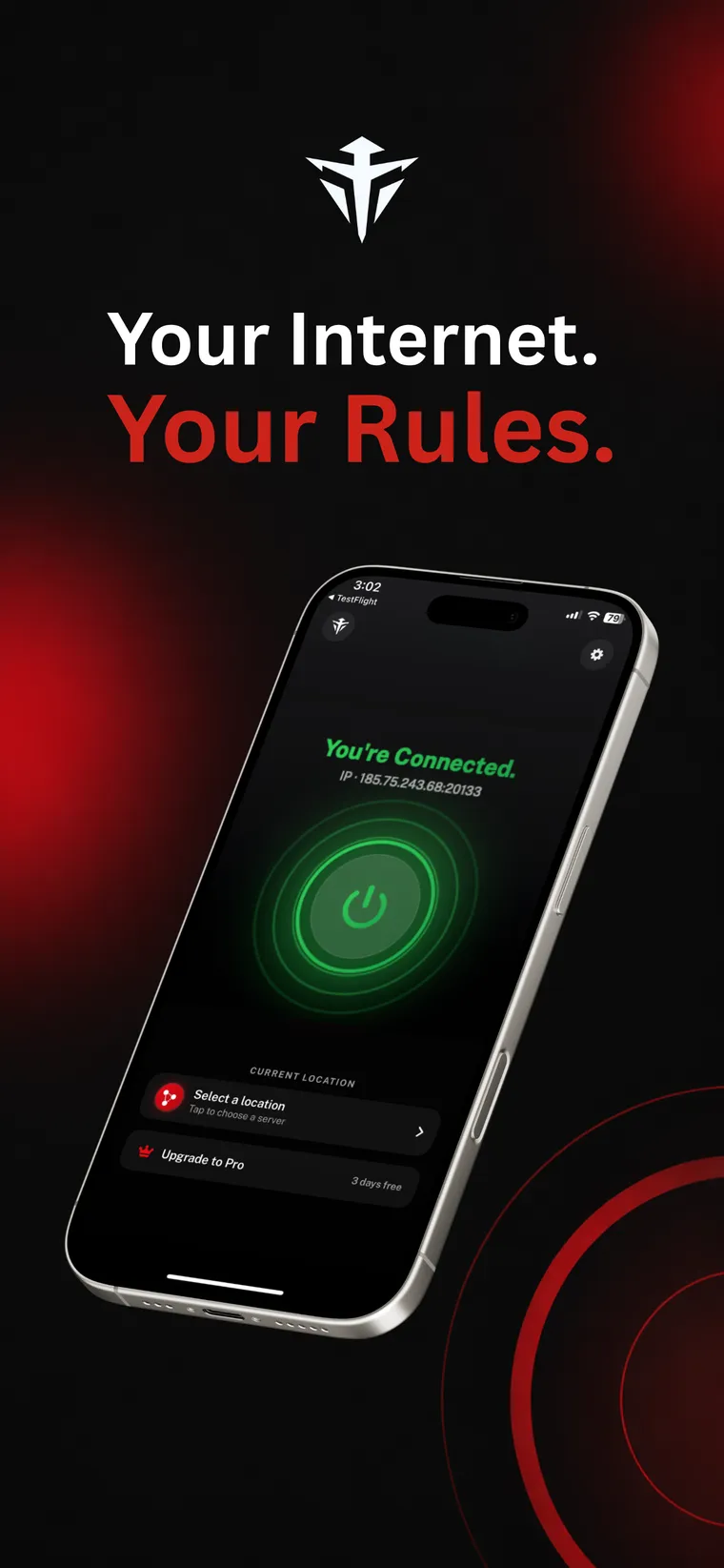
ConnectedThe app shows the IP you were given. 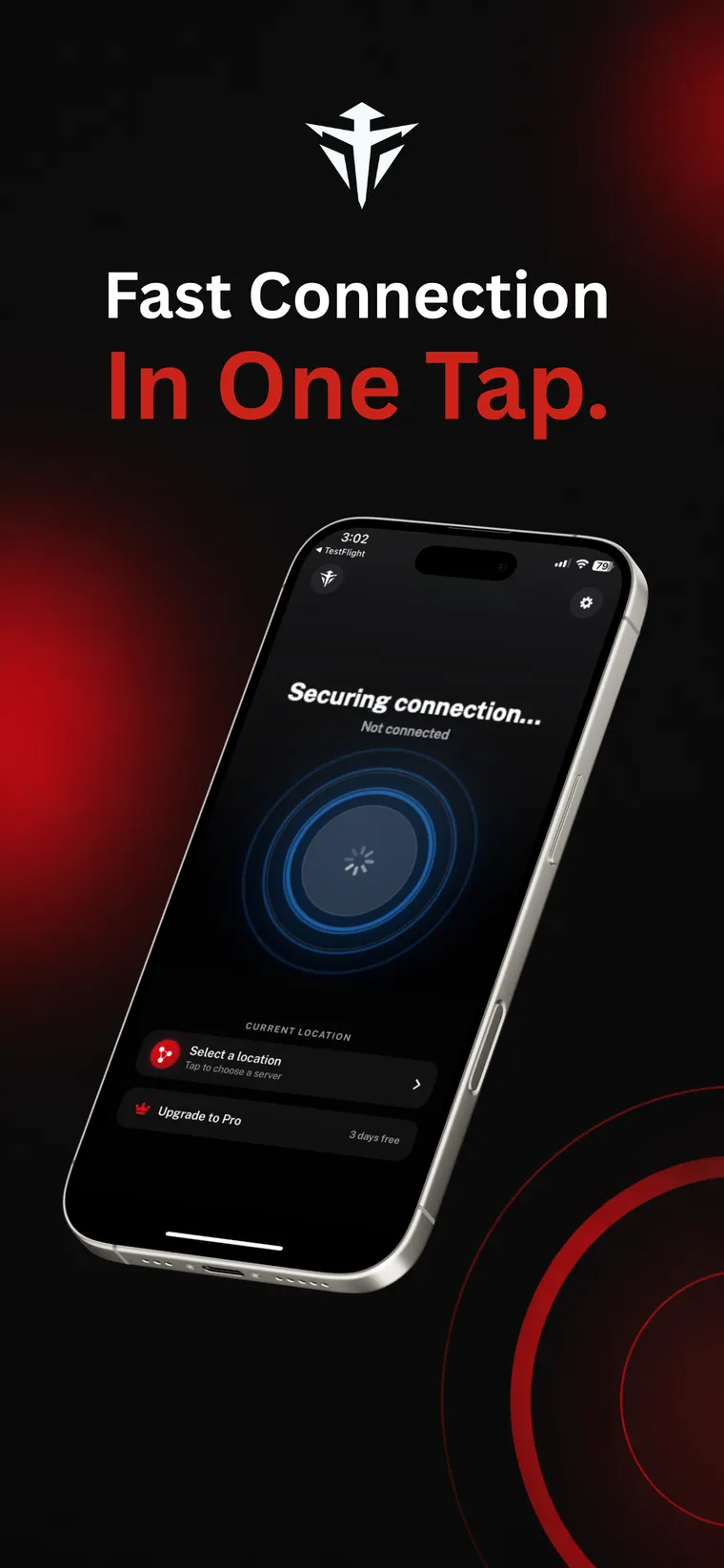
ConnectingNodes ranked by latency, fastest first. 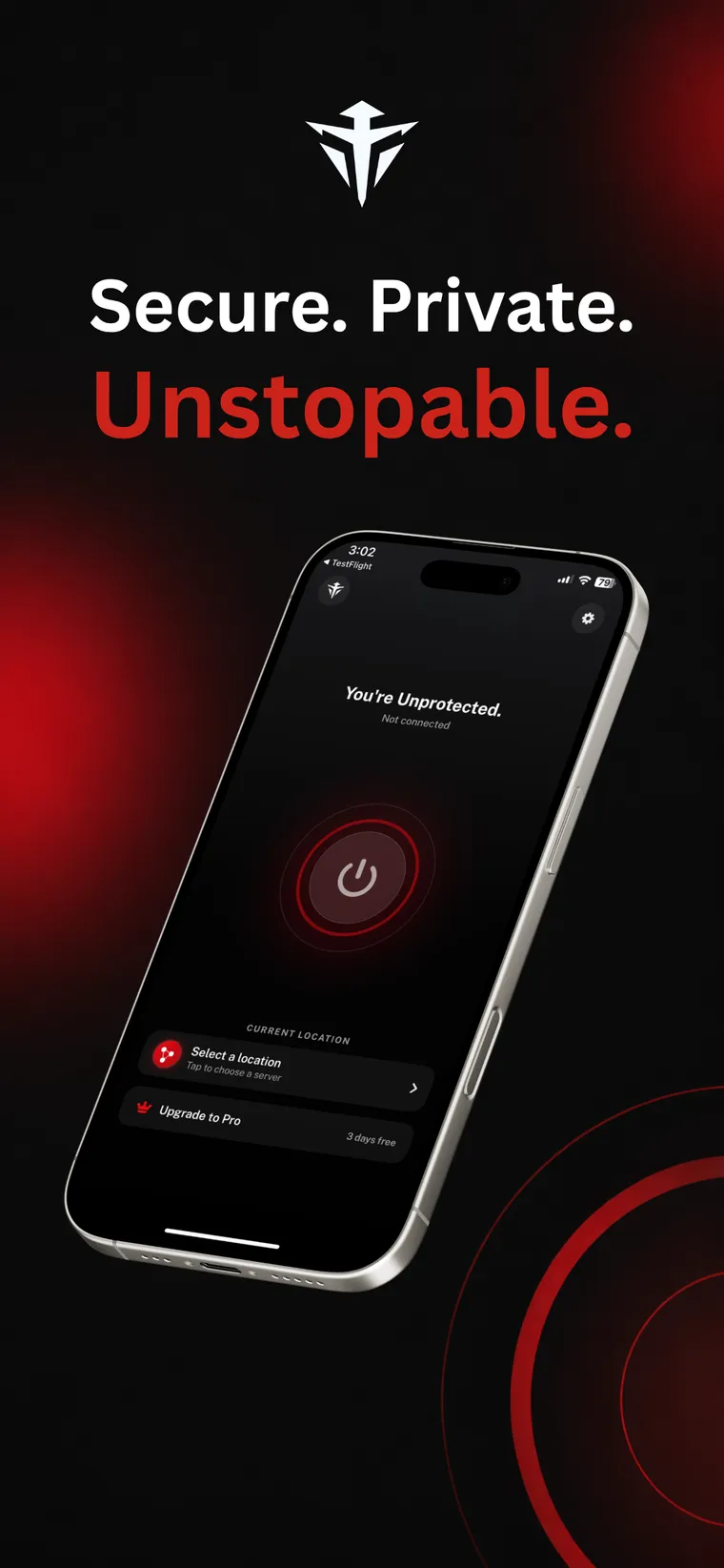
Not connectedRed means exposed. Green means protected.
How connection actually works.
Five things happen when you tap connect. We are involved in exactly one of them.
- 01
The key is made locally
A Curve25519 keypair is generated on your device. The private key is written to the keychain immediately. It is never transmitted, never backed up to us, and never recoverable by us.
- 02
Nodes are read off the chain
The app queries sentinelhub-2 for nodes that are live right now, then measures latency against them and ranks the results. No private server list is involved.
- 03
A session opens
Our orchestrator registers the session with the operator you landed on and hands back the node details. This is the only moment we are involved.
- 04
The handshake is direct
Your device and the node complete a WireGuard handshake between themselves. If it fails, Phantom penalises that node for 120 seconds and tries the next one, up to three attempts.
- 05
We are out of the picture
Traffic now flows device to node, encrypted, with nothing of ours in between. Your IP shows as the node. The app displays the exact address you were given.
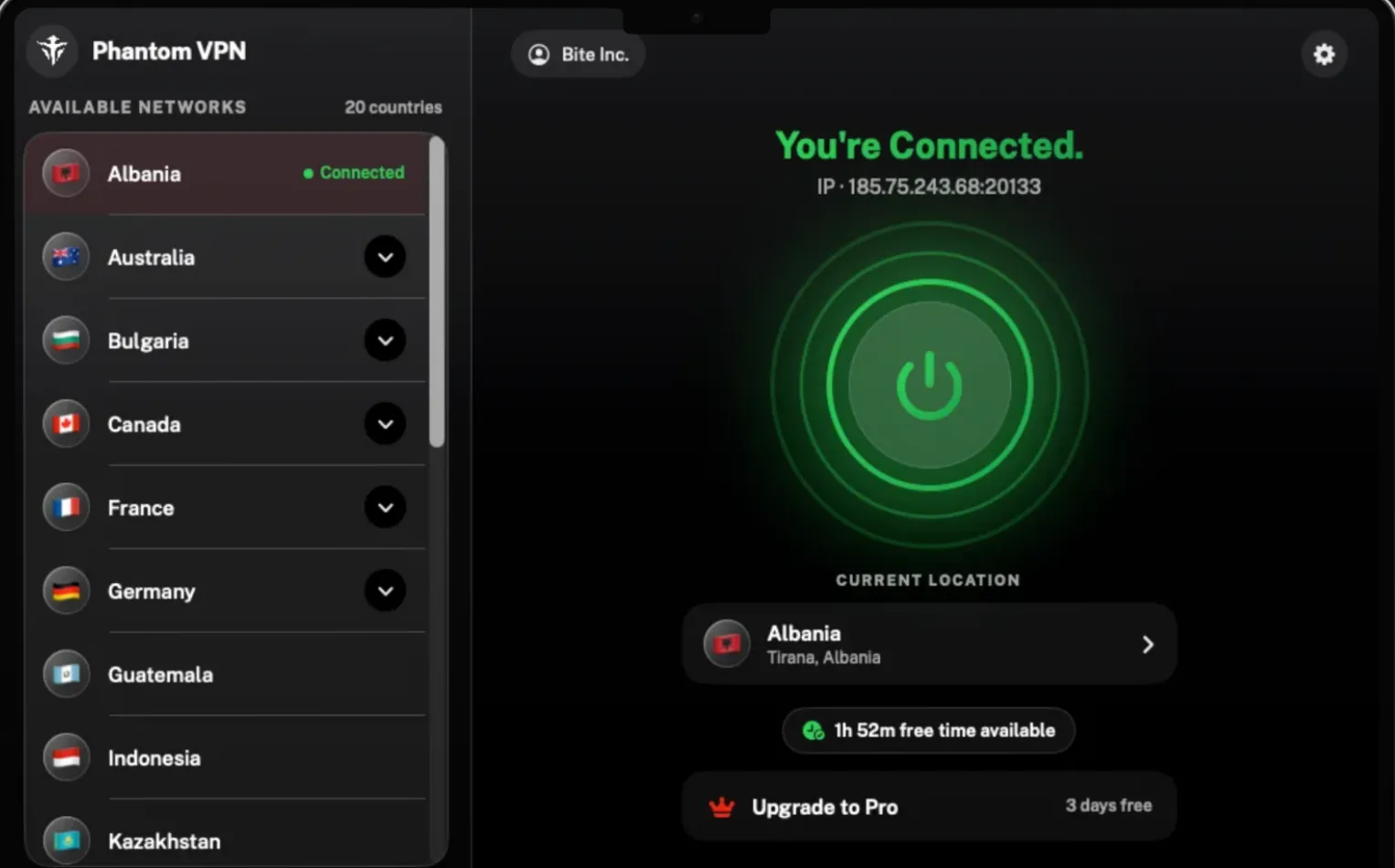
The Mac app on a live session. The address shown is the node's, and it is the one the rest of the internet sees.
What Phantom VPN does not do.
These are real gaps. They are not trade-offs we are proud of and we are not going to dress them up. If one of them rules Phantom VPN out for you, better you find out here than after you install it.
No kill switch
If the tunnel drops, your device can fall back to the normal connection until it comes back. Phantom VPN does not block traffic while it is down. If that risk matters to your situation, this is not the right tool today.
No split tunnelling
You cannot route one app outside the tunnel and keep the rest in. It is everything or nothing. Some banking and streaming apps behave badly under a full tunnel, and your only lever is to disconnect.
No ad, tracker or malware blocking
Phantom VPN moves your traffic. It does not inspect or filter it. Ads and trackers reach you exactly as they would without it, because filtering would mean looking at what you request.
No protocol choice
The app has a protocol picker on screen. It is forced to WireGuard and changing it does nothing. That is dead UI we have not removed yet, and we would rather say so than let you think it works.
No anonymous accounts
Signing in is required, by email code, Google or Apple. We store your email and last login. An account is tied to an identity, so Phantom VPN is not the answer for anonymity from us.
DNS goes to Cloudflare
The tunnel pushes 1.1.1.1 and 1.0.0.1. Your queries travel inside the encrypted tunnel and are resolved by Cloudflare, not by the decentralized network. We never see or log them, but we will not pretend they stay in-network.
Phantom VPN has also never been independently audited, and we do not claim multi-hop, obfuscation or RAM-only nodes. None of those exist in the code. If you see us claim one, tell us at support@phantomvpn.site and we will fix the page.
The free plan, without the small print.
Free here means you pay with attention instead of money. It is a real plan on the real network, and these are all of its rules.
You start at zero
A new account has 0 minutes. Nothing is granted up front.
One ad, 60 minutes
Watch an ad through to the end, at least 30 seconds, and 60 minutes land on your account.
Three ads a day
That is the limit. Three is 180 minutes of connection time earned in a day.
A 300 minute daily ceiling
Free usage is capped at 300 minutes per day regardless of your balance.
Metered by the minute
Time is counted server-side while you are connected, so the balance is real, not an estimate.
The same tunnel as Premium
Same WireGuard, same nodes, same countries, same on-device keys. Free is not a degraded tier.
Premium removes both the ad and the clock. It applies to your account rather than a device, so it is already there when you sign in somewhere else. Yearly works out at $5.00 a month and starts with 7 days free. Monthly is $9.99 with 3 days free.
One account. Every device you own.
Premium applies to your account, not to a seat. Sign in anywhere and it is already there.
Feature questions, answered
Does Phantom VPN have a kill switch?
No. There is no kill switch today. If the tunnel drops, your device can use its normal connection until Phantom reconnects, and traffic during that window is not protected. We would rather tell you than let you assume otherwise. On iPhone and iPad you can turn on auto-reconnect so the tunnel re-establishes itself after a network change, but that is a reconnect, not a block.
Can I route only some apps through the tunnel?
No. Phantom VPN is full-tunnel only. AllowedIPs is set to 0.0.0.0/0 and ::/0, so every app on the device goes through the tunnel while you are connected. There is no split tunnelling and no per-app exclusion list.
What happens if the node I am on goes down?
Phantom ranks nodes by measured latency before it connects. If a handshake fails, it penalises that node for 120 seconds so you are not sent back to it, and tries the next healthy node. It makes up to three attempts before it reports a failure to you.
Does the free plan use different servers?
No. Free and Premium use the same independently operated nodes, the same WireGuard tunnel, and the same countries. The difference is time: free minutes are earned by watching an ad, 60 minutes per ad, up to three a day, with a 300 minute daily ceiling. Premium removes the ads and the clock.
Which encryption and which DNS does Phantom VPN use?
WireGuard, with a Curve25519 keypair your device generates fresh on every connection and keeps in the keychain. Only the public key leaves the device. The tunnel pushes Cloudflare DNS, 1.1.1.1 and 1.0.0.1, so your queries are resolved by Cloudflare from inside the encrypted tunnel. We never log your DNS queries or the content of your traffic.
Now you know both lists.
Free to start. iOS 17, macOS 14 Sonoma and Android 8.0 or later.
Get Phantom VPN