Your Internet.
Your Rules.
Most VPNs ask you to trust one company with every site you visit. Phantom VPN removes the company.

- Countries
- 15+
- Tunnel
- WireGuard
- Your keys
- On-device
Independently run nodes, live right now
Modern encryption, every app routed
The private half never leaves your phone
Three steps, and none of them are us.
Read the technical detail- 01
Your device makes a key
A fresh Curve25519 keypair is generated locally. The private key goes straight into the keychain and never leaves.
- 02
We find you a node
Phantom queries the sentinelhub-2 chain for live nodes, probes them for latency, and opens a session with the fastest healthy one.
- 03
The tunnel is direct
Your device and the node establish an encrypted WireGuard tunnel between themselves. Nothing about your traffic passes through us.
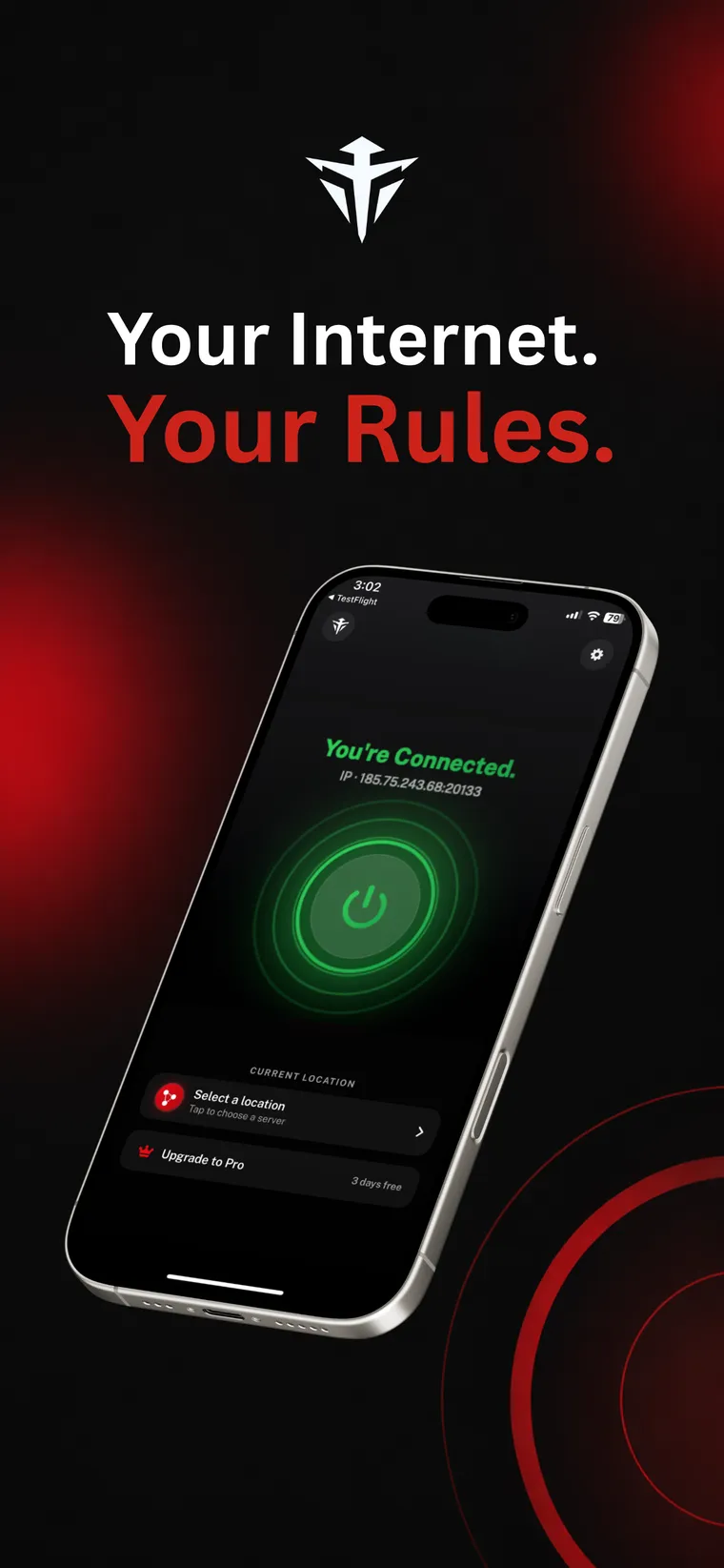
ConnectedThe app shows the IP you were given. 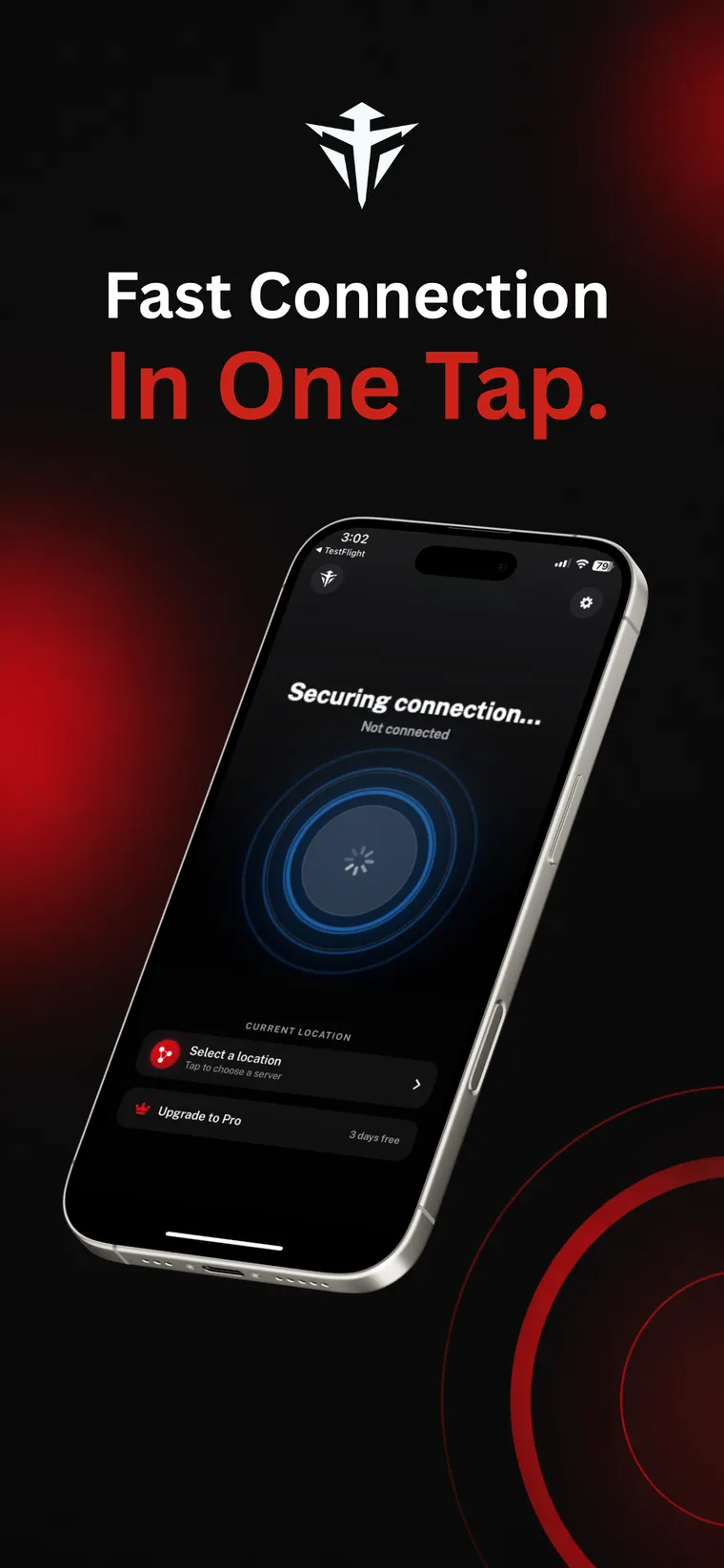
ConnectingNodes ranked by latency, fastest first. 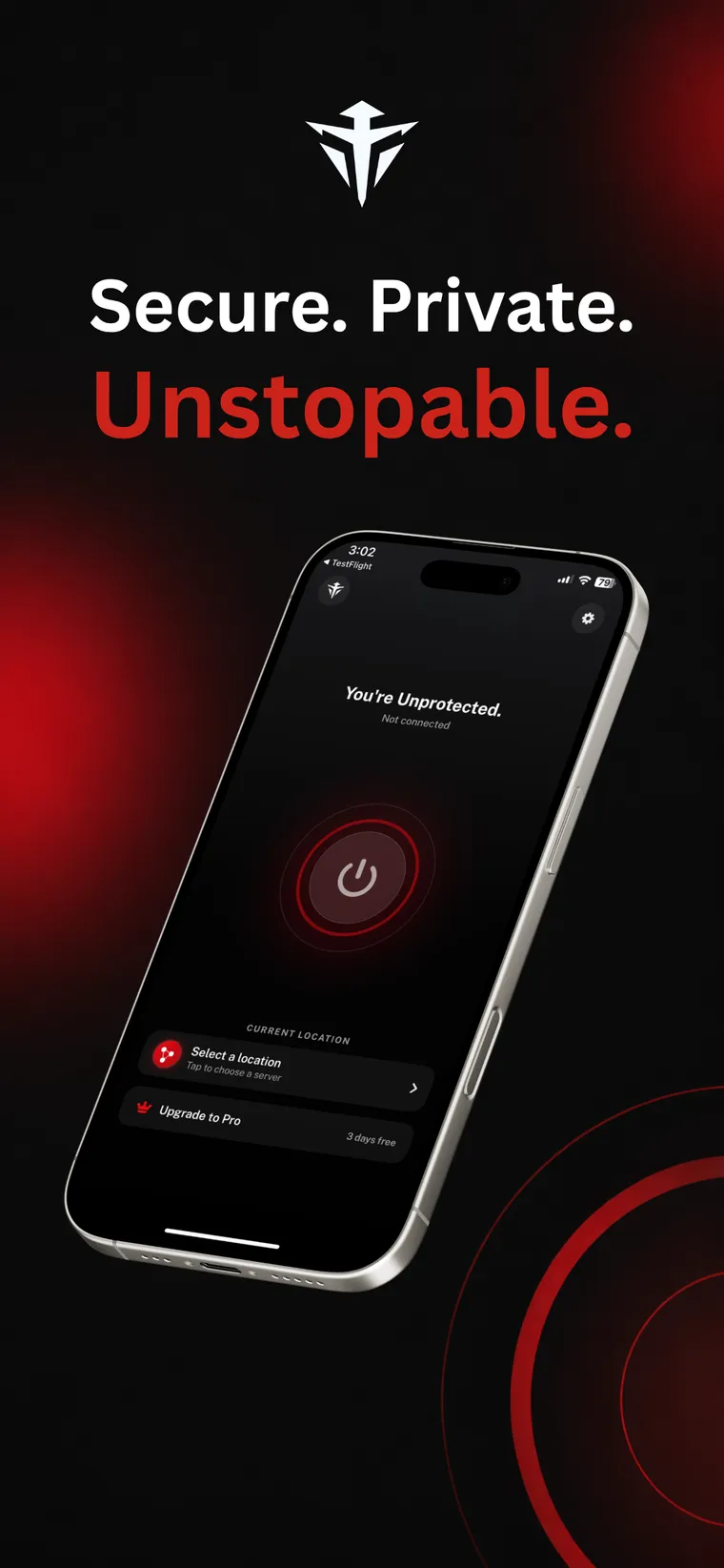
Not connectedRed means exposed. Green means protected.
Every VPN asks you to trust someone.
We removed the someone.
No fleet to seize
A traditional VPN owns its servers, so one subpoena reaches every user. Phantom VPN owns none. Nodes are run by independent operators and discovered through an on-chain query to sentinelhub-2. There is no central server list to hand over.
Your key never leaves
Your device generates a fresh Curve25519 keypair every time it connects and keeps the private half in the keychain. Only the public key is ever sent. We could not decrypt your tunnel if we wanted to.
We are not in the path
The encrypted tunnel runs directly between your device and the node you picked. Your traffic never touches our infrastructure, so your browsing is not ours to log, leak, or sell.
One account. Every device you own.
Premium applies to your account, not to a seat. Sign in anywhere and it is already there.
The difference isn't the feature list. It's who holds the keys.
Traditional VPNs compete on server counts. That number only means anything if you already trust the company that owns them. Here is the comparison that doesn't ask you to trust anyone.
| Property | Phantom VPN | Typical VPN |
|---|---|---|
| Who owns the servers | Independent operators | The VPN company |
| How servers are found | A public, on-chain query | The company's private list |
| One subpoena reaches | One operator | Every user |
| Tunnel key is created | On your device | On your device |
| Your traffic passes through them | No, we are not in the path | Yes, all of it |
| You can verify the node list | Yes, read the chain | No, take their word |
"Typical VPN" describes the standard centralized model most major providers use. Individual products differ, so check any provider's own documentation for specifics.
Decentralized underneath. Ordinary to use.
One tap to connect
Pick a country or let Phantom choose. The tunnel is up in seconds, and the app shows the exact IP you have been assigned.
Automatic failover
Nodes are ranked by measured latency before you connect. If one fails its handshake, Phantom retries a healthier node and sidelines the bad one.
Auto-reconnect
Move from Wi-Fi to cellular and the tunnel re-establishes on its own, so a network change does not quietly leave you exposed.
Everything routed
Full-tunnel by default. Every app on your device goes through the tunnel, not just your browser.
Native on every platform
Real Swift and Kotlin apps, not a wrapped web page. Menu-bar mode on Mac, a two-pane layout on iPad, universal on Apple silicon and Intel.
Yours in 10 languages
English, German, Spanish, French, Italian, Japanese, Korean, Portuguese, Russian and Swedish. The whole app, not just the buttons.
Everyone says "no logs."
Here is our actual list.
A VPN that kept literally nothing could not bill you or stop abuse. So rather than say "zero logs" and hope you don't check, here is precisely what we cannot see and precisely what we hold. There is no third column.
What we never see
The sites you visit
Your traffic never enters our systems, so there is nothing for us to record.
Your DNS queries
Resolved inside the tunnel, between your device and the node.
The content you send
Encrypted end to end with a key we have never held.
The tunnel runs directly between your device and an independent node. We are not in the path.
What we do keep, and why
Connect and disconnect events
To bill fairly and to catch abuse of the free tier.
Which node, and when
To measure node health so we can route you around bad ones.
Minutes used
To meter free time. Premium accounts are not metered.
The email on your account
To sign you in and restore your purchase on a new device.
That is the whole list. No asterisks.
Free to use. Premium when you want it gone.
The free plan is real: watch a short ad, get 60 minutes of connection time, up to three times a day. Premium drops the ads and the clock, and covers every device on your account.
Best value
$4.92/month
$59 billed yearly, save 45%
7 days free
Questions, answered
What is a decentralized VPN?
A decentralized VPN routes your traffic through independently operated nodes instead of servers owned by one company. Phantom VPN runs on the Sentinel network: nodes are discovered through a public on-chain query, so there is no private server list and no single operator who can be compelled to hand over every user at once.
Does Phantom VPN keep logs?
We never log your browsing, your DNS queries, or the content of your traffic. The encrypted tunnel runs directly between your device and an independent node, so it never passes through our systems. We do keep a small amount of operational data: connect and disconnect events, which node and when, minutes used, and the email on your account. That full list is published on our privacy page, with the reason for each item.
Is Phantom VPN free?
Yes, there is a genuinely free way to use it. You earn connection time by watching a short ad. You get 60 minutes per ad, up to three a day. Premium removes the ads and the time limit entirely.
Which devices does Phantom VPN support?
Phantom VPN has native apps for iPhone and iPad (iOS 17 or later), Mac (macOS 14 Sonoma or later, Apple silicon and Intel) and Android (8.0 or later). Premium applies to your whole account, so it works on every device you sign in on.
What encryption does Phantom VPN use?
WireGuard, with a Curve25519 keypair your device generates fresh on every connection. The private key is stored in your device keychain and never transmitted. Only the public key is shared with the node.
How many countries can I connect to?
More than 15 countries typically have a node online. Because Sentinel is permissionless, operators join and leave continuously, so live coverage moves. The app always shows the real list at the moment you connect.
Take the company out of your connection.
Free to start. Nothing to cancel. Works on everything you own.
Get Phantom VPN